
Cats are known for their agility, precision, and seemingly superhuman navigation skills. But have you ever stopped to think about how they’re able to dodge furniture or sneak up on toys with such ease? The answer lies in those long, thin strands of fur above their eyes – their whiskers! As it turns out, these feline features are more than just a stylish accessory; they play a crucial role in their sensory system. In this article, we’ll delve into the anatomy and function of cat whiskers, exploring how they help navigate surroundings, detect objects, and protect against injury. Whether you’re a seasoned cat owner or simply a curious animal lover, understanding the importance of these often-overlooked features can deepen your appreciation for our furry friends’ remarkable abilities.
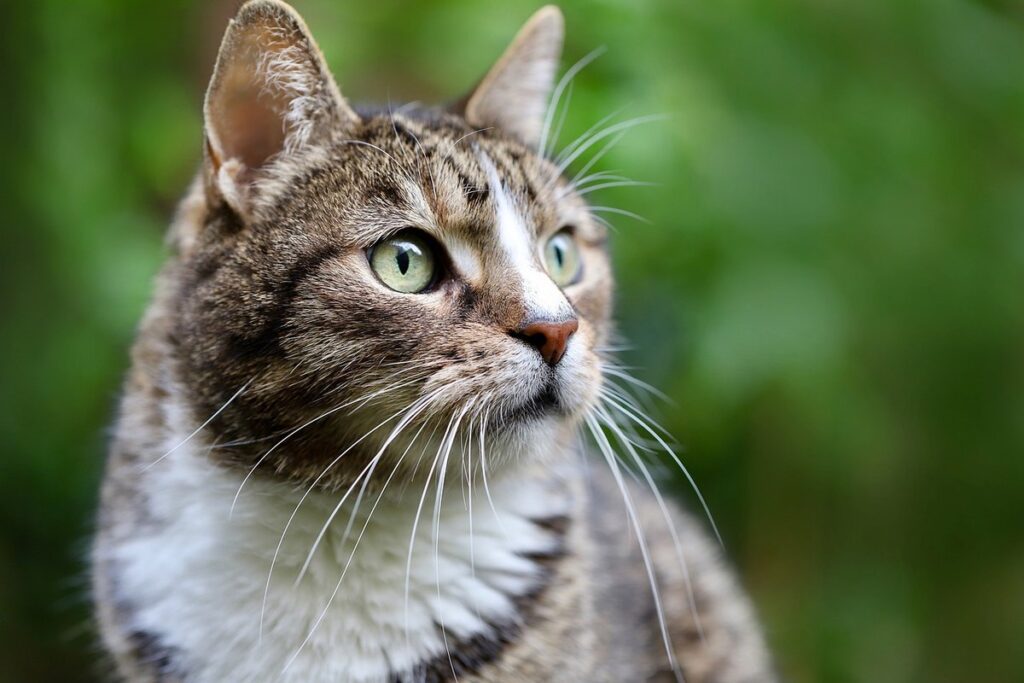
The Evolutionary Purpose of Feline Whiskers
Let’s dive into why your cat’s whiskers are so crucial for their navigation and spatial awareness, a vital part of their hunting prowess.
Sensory Functions: Tactile and Spatial Awareness
When you think about it, whiskers are more than just a fashion statement for cats. They play a vital role in their daily lives, helping them navigate their surroundings with ease and precision. Let’s take a closer look at how feline whiskers assist with tactile and spatial awareness.
One of the primary functions of whiskers is to detect objects and obstacles in their path. By sensing even slight changes in air pressure and temperature, whiskers provide cats with valuable information about their environment. This is particularly important for indoor cats who may not be aware of the presence of furniture or other objects that can cause tripping hazards. For example, a cat’s whiskers will detect the subtlest movement of an invisible toy or even the vibrations from a distant bird outside.
To give you an idea of just how sensitive whiskers are, consider this: a human eyelash is about 100 microns thick, while a feline whisker can be up to 1 millimeter in diameter. That’s ten times thicker! This impressive size allows cats to feel even the slightest changes in air pressure and temperature. By paying attention to their whiskers, your cat can maintain balance and avoid collisions with ease.
When you notice your cat twitching or flicking its whiskers, it may be a sign that they’re sensing something interesting – like food or a hidden toy. Paying attention to these cues can help you understand what’s going on in your cat’s mind.
Protective Mechanism: Warning System Against Injury
Whiskers serve as a crucial warning system for potential collisions or injuries by detecting subtle changes in air pressure and temperature. This mechanism is particularly important for cats, as they navigate their environment with ease, often relying on their senses to avoid obstacles.
Think of it like this: when you’re walking through a dense forest, the rustling of leaves or the snapping of twigs can signal potential dangers ahead. Similarly, a cat’s whiskers pick up on changes in air pressure and temperature, allowing them to anticipate collisions with objects. This is especially important for cats who often navigate narrow spaces or hunt in dense vegetation.
In practical terms, a cat’s whiskers help them gauge the width of openings and detect even slight changes in their surroundings. For example, if a cat approaches a narrow doorway, its whiskers will detect the subtle change in air pressure as it enters the space, allowing it to adjust its trajectory accordingly. This warning system is an essential part of a cat’s evolutionary adaptation, enabling them to navigate their environment with precision and agility.
Anatomical Structure and Function
Cats’ whiskers above their eyes serve multiple purposes, including sensing spatial awareness and detecting changes in air pressure. Let’s dive into how these specialized hairs contribute to a cat’s remarkable navigational abilities.
The Bristle-Like Hair Follicles
Whisker follicles are uniquely structured to provide cats with an extra layer of sensory perception. Located just above their eyes, these sensitive hairs are anchored deep within the skin, typically between 1-2 mm, allowing for a high degree of sensitivity and flexibility. Their thickness is relatively uniform, measuring around 0.5 mm in diameter, which contributes to their remarkable ability to detect even the slightest changes in air pressure and temperature.
But what sets whisker follicles apart from regular hair follicles is the presence of sensory nerve endings within each one. These specialized nerve endings allow cats to tap into a broader range of stimuli, including touch, pressure, and even spatial awareness. This sensitive data is then transmitted to the brain for processing, providing essential information about the cat’s surroundings.
The unique structure of whisker follicles enables cats to navigate through tight spaces with ease and precision. Their exceptional sensitivity also helps them detect subtle changes in their environment, such as detecting prey or avoiding potential threats.
Innervation and Sensory Pathways
Cats have sensitive nerve endings embedded within their whiskers, which allow them to detect even the slightest changes in air pressure and temperature. These nerve endings are responsible for transmitting signals to the brain via the trigeminal nerve, a major sensory pathway that plays a crucial role in facial sensation.
The arrangement of these nerve endings is remarkable – they’re concentrated at the base of each whisker follicle, where the hair meets the skin. This strategic positioning enables cats to build up a detailed picture of their surroundings through tactile feedback. For instance, when navigating through a dark alley or sniffing out prey in dense foliage, whiskers come into play as sensitive barometers that alert the cat to potential obstacles.
Interestingly, research suggests that these nerve endings are capable of detecting changes as subtle as 0.1 mm in air pressure – an impressive feat considering the cat’s whisker density and sensitivity. By processing this wealth of sensory information, cats can develop a sophisticated mental map of their environment, allowing them to move with precision even in low-light conditions.
Types of Whiskers: Variations in Length and Distribution
Let’s take a closer look at how whisker length and distribution can vary from cat to cat, impacting their unique appearance. You’ll notice distinct patterns emerging.
The Dorsal and Ventral Regions
When it comes to understanding the anatomy of a cat’s whiskers, one crucial aspect is recognizing the differences between the dorsal and ventral regions. The dorsal region refers to the upper whisker area above the eyes, while the ventral region lies below.
The dorsal region typically boasts longer and thicker whiskers compared to their lower counterparts. This is because these sensitive hairs serve as an essential navigational tool for cats when exploring their surroundings, particularly in tight spaces. In contrast, the ventral region’s whiskers tend to be shorter and more delicate. Their primary function is to detect subtle changes in air pressure, helping your feline companion gauge distances.
It’s worth noting that both regions have unique sensitivities, allowing cats to effectively scan their environment. The combination of these distinct characteristics enables them to build a comprehensive spatial map, which helps them navigate with ease.
In terms of practical application, recognizing the differences between the dorsal and ventral whisker regions can aid in understanding your cat’s behavior. For instance, if you notice changes in your cat’s sensitivity or reaction time, it may be indicative of underlying health issues that require veterinary attention.
Variation in Individual Cats
Just like human fingerprints, no two cats have exactly the same whisker pattern. Even within a single litter, kittens can develop unique variations in whisker length and distribution due to genetics or developmental factors. This is because the growth and development of whiskers are influenced by multiple genetic and environmental factors.
For instance, some breeds, such as the Sphynx, may have shorter or even absent whiskers due to their breed-specific characteristics. On the other hand, some individual cats within a breed can still exhibit varying lengths and distributions of whiskers. This is why it’s essential for cat owners to understand that every cat is unique.
Observing your cat’s whisker pattern can provide valuable insights into its personality, habits, and overall health. For example, if you notice a significant increase or decrease in the length or thickness of your cat’s whiskers, it may indicate changes in its diet, stress levels, or other environmental factors.
When examining your cat’s whiskers, look for patterns such as uneven growth, kinked or bent whiskers, or missing whiskers altogether. These variations can be a sign of underlying health issues that require veterinary attention. By recognizing and understanding the unique characteristics of your cat’s whisker pattern, you can better care for its overall well-being.
Comparison with Other Feline Characteristics
Let’s see how whiskers stack up against other distinctive feline features, like their pointed ears and agile paws. How do these unique characteristics compare to whiskers in terms of purpose and functionality?
The Role of Whiskers in Social Communication
When it comes to social communication among felines, whiskers play a vital role beyond just navigation. They’re an essential aspect of courtship rituals and dominance displays, serving as a key indicator of a cat’s emotional state and intentions.
During mating season, male cats will often perform elaborate courtship displays, including head-butting, rubbing, and licking their partner’s face, whiskers, and body. This behavior is not only a way to establish familiarity but also to assess the female’s receptivity. Whisker-to-whisker contact, in particular, allows cats to gauge each other’s pheromone levels, which convey vital information about reproductive readiness.
In dominance displays, cats will often stand tall, puffed out with raised whiskers, to assert their position and intimidate rivals. The angle and direction of a cat’s whiskers can also signal aggression or defensiveness, serving as a warning sign for potential opponents. By paying attention to these subtle cues, you can better understand your feline companion’s social dynamics and even use this knowledge to reduce conflicts within multi-cat households.
Differences from Humans and Other Animals
Cats have an uncanny ability to navigate through tight spaces and judge distances with remarkable precision. One of the key factors contributing to this exceptional spatial awareness is their whiskers. Unlike human facial hair, which primarily serves aesthetic purposes, a cat’s whiskers are highly specialized sensory organs that play a crucial role in their daily lives.
While humans possess sensitive nerve endings on their fingertips, cats have similarly sensitive follicles embedded within their whiskers. These sensitive areas allow them to detect even the slightest changes in air pressure and temperature, providing vital information about their surroundings. This unique adaptation enables felines to gauge distances with remarkable accuracy, often allowing them to squeeze through openings that would be impassable for other animals.
Compared to other animal species, cats’ whiskers are remarkably efficient at detecting subtle changes in their environment. While some animals rely on visual cues or sensitive ears, feline whiskers provide a distinct advantage when it comes to spatial awareness and navigation. This is just one example of the remarkable differences between human facial hair and other animal sensory adaptations, highlighting the unique evolutionary pressures that have shaped cat behavior over time.
Health Implications: When Whisker Sensitivity is a Concern
Cats with sensitive whiskers may exhibit unusual behaviors, such as avoidance of certain foods or environments, and in severe cases, it can impact their overall health. This section delves into those concerns.
Feline Visual Impairment and Whisker Development
If you’ve ever wondered why some cats appear to have less sensitive whiskers than others, it’s worth considering their visual health. Research suggests that feline visual impairments may indeed impact whisker development and sensitivity. For example, a study on cats with retinal degeneration found that these animals’ whiskers were less responsive to tactile stimuli compared to those with normal vision.
But why does this happen? One theory is that the brain’s processing of sensory information from the whiskers is closely linked to visual perception. When a cat’s eyes are impaired, its brain may reorganize to prioritize other senses, like hearing and smell, over whisker sensitivity. This can result in reduced whisker responsiveness.
Interestingly, not all cats with visual impairments will exhibit this trait. Genetics, lifestyle, and age also play a role in determining whisker sensitivity. As a cat owner, being aware of your pet’s individual needs is crucial. If you suspect that your cat has impaired vision or less sensitive whiskers, consult with your veterinarian to determine the best course of action for your furry friend. By acknowledging these factors, you can better understand and care for your cat’s unique sensory profile.
Other Potential Causes of Altered Whisker Sensation
If you’ve noticed that your cat’s whisker sensation has changed, it may be due to factors other than facial injuries. Neurological disorders can also cause altered whisker sensitivity. Feline hyperesthesia syndrome (FHS), for example, is a condition where cats experience extreme sensitivity on their skin, including their whiskers. This can lead to discomfort, pain, and changes in behavior.
Other possible causes of altered whisker sensation include injuries or trauma to the face, as previously mentioned, but also infections, inflammation, or nerve damage. For instance, if your cat has an abscess or a dental issue that’s causing facial swelling, it may affect their whisker sensation.
If you suspect any underlying health issues contributing to your cat’s altered whisker sensitivity, consult with your veterinarian for proper diagnosis and treatment. Regular veterinary check-ups can also help identify potential problems before they become severe. In the meantime, observe your cat’s behavior closely, as changes in whisker sensation can often signal a more significant issue at play.
Conclusion: The Importance of Feline Whiskers
So, now that we’ve explored why your cat’s whiskers are above their eyes, let’s dive into what makes these feline features so crucial.
Recap of Key Findings
In recap, our exploration of feline whiskers has revealed several key findings. Firstly, the anatomy of cat whiskers is designed for spatial awareness and navigation. The unique nerve endings within these sensitive hairs allow cats to detect even the slightest changes in air pressure, temperature, and humidity, helping them gauge their surroundings with remarkable accuracy.
Furthermore, we’ve seen that feline whiskers play a crucial role in facilitating social behavior. By detecting subtle visual cues, such as ear position and whisker alignment, cats can convey vital information about their emotional state and intentions to other members of their social group.
In addition, our discussion has highlighted the importance of whiskers in aiding vision and balance. The positioning of these sensitive hairs above the eyes enables cats to judge distances with ease and react swiftly to changing situations. As a result, it’s essential for cat owners to recognize the significance of feline whiskers in their pets’ daily lives and ensure that they’re not inadvertently compromising their sensitivity or functionality.
Implications for Cat Care and Welfare
Understanding cat whisker sensitivity is crucial for promoting their overall well-being. These highly sensitive organs are not just aesthetically pleasing; they play a vital role in helping cats navigate and interact with their environment.
When handling or caring for a cat, it’s essential to respect its whiskers and avoid touching or pulling them, as this can cause stress and discomfort. Instead, gently stroke your cat’s cheeks or forehead, allowing it to become accustomed to the sensation before gradually working towards more sensitive areas.
Consider the following tips when interacting with cats: move slowly and deliberately, allow them space to retreat if needed, and always prioritize their comfort and consent. For instance, if you notice your cat is twitching its whiskers while being petted, it’s likely uncomfortable – give it a break and let it initiate contact again.
By acknowledging and respecting cat whisker sensitivity, we can foster trust and create a more harmonious relationship between humans and felines. Remember, every cat is unique, so be attentive to their individual needs and boundaries.
Frequently Asked Questions
Can I remove my cat’s whiskers if they’re causing a problem?
No, it’s not recommended to remove your cat’s whiskers, as they play a vital role in their navigation and spatial awareness. If you suspect an issue with your cat’s whisker sensitivity, consult with a veterinarian for advice.
How do I care for my cat’s whiskers to ensure they remain healthy and sensitive?
Regular grooming is essential for maintaining your cat’s whisker health. Use gentle touch when petting or brushing around the face area, avoiding direct pressure on the whiskers themselves. Regular nail trimming and eye cleaning can also help prevent irritation.
Can cats with visual impairments still have functional whiskers?
Yes, cats with visual impairments can still rely heavily on their whiskers for navigation and spatial awareness. In fact, some research suggests that blind cats may even rely more on their whisker sensitivity to compensate for their limited vision.
How long do cat whiskers typically take to grow back after injury or trimming?
The growth rate of cat whiskers varies depending on factors like age, nutrition, and individual genetics. On average, cat whiskers can take several weeks to a few months to regrow completely, with some cases taking up to 6-12 months for full recovery.
Are there any health implications associated with excessively long or short whiskers in cats?
Yes, extremely long or short whiskers can be indicative of underlying health issues. For example, excessively long whiskers may suggest a hormonal imbalance or nutritional deficiency, while very short whiskers could be a sign of feline visual impairment or other sensory disorders. Consult a veterinarian if you notice unusual changes in your cat’s whisker length.