
You might be surprised to know that domestic cats and lions share a common ancestry. Despite their differences in size, temperament, and living habits, these two felines are closely related. In fact, they both belong to the Felidae family, which is home to over 40 species of wild cats and their domestic counterparts. But how much do we really know about this shared heritage? From their physical characteristics to their evolutionary history, there’s a wealth of fascinating information waiting to be uncovered. In this article, we’ll delve into the truth behind the connection between domestic cats and lions, exploring their unique behaviors and uncovering the secrets that lie at the heart of their shared ancestry.
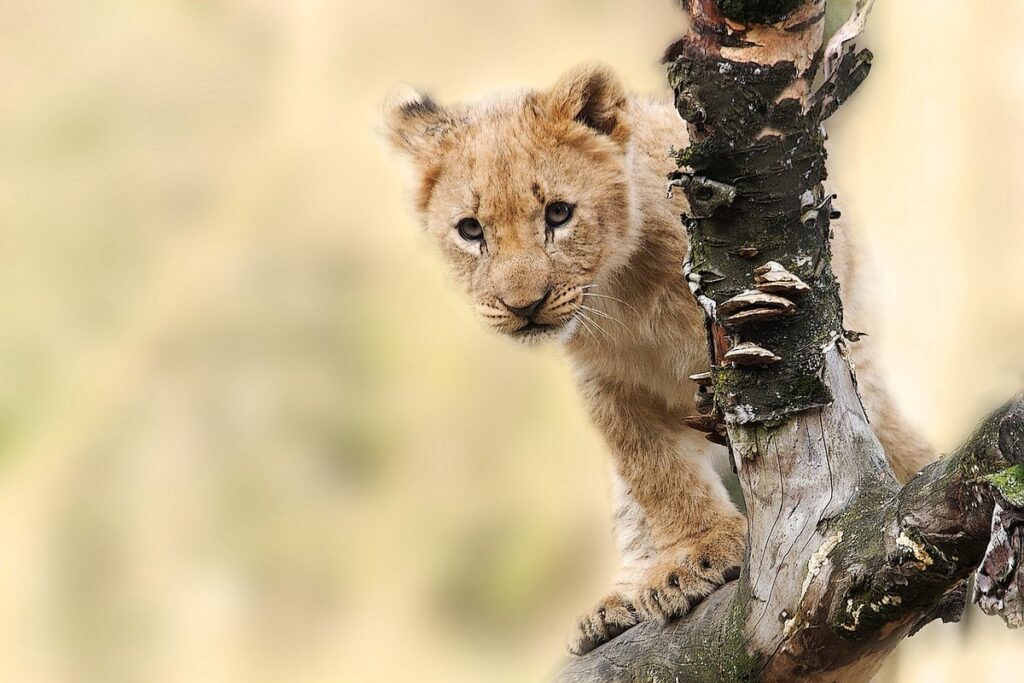
What’s the Connection Between Cats and Lions?
Cats and lions may seem worlds apart, but they share a fascinating connection that reveals the true nature of our feline friends. Let’s dive into what makes these two species related.
Physical Characteristics: A Comparison of Cat and Lion Body Types
When you gaze into the eyes of a domestic cat and a lion, it’s hard not to notice the striking physical differences between these two feline friends. Let’s take a closer look at some of the key physical characteristics that set them apart.
One of the most obvious differences is size: lions are massive, with males weighing up to 550 pounds (250 kg) and reaching lengths of 8 feet (2.4 meters). In contrast, domestic cats typically weigh between 10-20 pounds (4.5-9 kg) and reach lengths of around 3 feet (90 cm). This size difference is no surprise, given that lions are the second-largest feline species after tigers.
In terms of fur, both cats and lions have a thick coat to protect them from the elements, but lion coats are longer and thicker, with a distinctive golden or tawny hue. Domestic cat fur, on the other hand, comes in an astonishing array of colors and patterns, ranging from sleek black to fluffy white.
Other key physical differences include the lion’s powerful mane, which serves as a sign of masculinity and helps protect its neck during fights. Domestic cats have shorter, smoother coats and lack this distinctive feature altogether. Additionally, lions have longer legs and a more muscular build than domestic cats, allowing them to cover great distances at high speeds when hunting or migrating.
Overall, while both cats and lions share many physical characteristics, their size, fur, and other features make it easy to tell these two feline species apart.
Hunting Styles: Understanding Feline Behavior in Both Species
When we think of hunting styles, domestic cats and lions might seem like vastly different predators. However, they share some common traits when it comes to stalking and catching their prey. Both species use stealth and patience to get close to their quarry, often relying on ambush tactics.
Domestic cats, for instance, typically rely on quick reflexes to pounce on unsuspecting rodents or birds. Lions, on the other hand, have been observed using coordinated attacks with multiple members of their pride to bring down larger prey like antelope and zebras. Both species also exhibit exceptional hearing and vision when it comes to tracking and locating potential meals.
Interestingly, domestic cats’ hunting behavior can be influenced by factors such as age, nutrition, and even genetics. Research suggests that some domestic cats are more adept at hunting than others due to their ancestry or breeding. Despite these similarities, the most significant difference lies in the size of their prey and the level of cooperation required for a successful hunt.
In practical terms, understanding the hunting styles of both species can help us better appreciate the natural world and even improve our own cat’s hunting skills through targeted training and enrichment activities.
Evolutionary History: How Cats and Lions Share a Common Ancestor
Let’s dive into the fascinating world of feline evolution, where we’ll explore how cats and lions share a common ancestor that dates back millions of years. This surprising connection will reveal their deep-rooted relationship.
The Origins of Felids: Unraveling the Mystery of Cat and Lion DNA
The origins of felids can be traced back to the Paleocene epoch, around 60 million years ago. At that time, the first felines emerged from a group of small, weasel-like mammals. These early ancestors were likely solitary hunters, feeding on insects and small prey. Over time, as the continents drifted apart and climates changed, these felines adapted to their environments and began to evolve into distinct species.
One of the earliest known felid ancestors is Proailurus, a genus that lived around 20 million years ago in Africa and Eurasia. Proailurus was larger than modern domestic cats and had more primitive characteristics. Its DNA suggests a close relationship with both modern lions and tigers, indicating that these big cats shared a common ancestor.
By studying the genetic makeup of modern felids, scientists have been able to reconstruct their evolutionary history. This has revealed a complex and branching tree of life, with many species diverging from one another over millions of years. The closest living relatives of domestic cats are lions, leopards, and tigers, which all share a common ancestor that lived around 6-8 million years ago.
Key Milestones in Feline Evolution: From Early Mammals to Modern Cats
The feline family has undergone significant transformations over millions of years, with early mammals adapting to their environments and eventually giving rise to the diverse range of cat species we see today. One key milestone was the emergence of the earliest known felines, such as Proailurus, around 25 million years ago during the late Oligocene epoch.
These early cats were much smaller than modern cats, with a more primitive dental structure and less specialized limbs for hunting. However, they possessed some essential adaptations that allowed them to thrive in their environments, including larger eyes and acute hearing. Their ability to navigate dimly lit forests and grasslands likely contributed to their success.
As the ages passed, felines continued to evolve and diversify, with notable developments including the emergence of big cats like Panthera leo (lion) around 2-3 million years ago during the Pleistocene epoch. This period saw significant advances in hunting prowess and territorial behavior, setting the stage for modern cat species.
The evolution of modern domesticated cats can be attributed to their adaptability and ability to thrive in human-dominated landscapes.
Taxonomy: Why Domestic Cats Are Not a Subspecies of Lion
One common misconception is that domestic cats are actually a subspecies of lions, but let’s dive into why this just isn’t true. We’ll explore the science behind cat classification in the next few sections.
Understanding the Hierarchy: Felidae Family, Genus, and Species Classification
The Felidae family is vast and diverse, encompassing over 40 species of cats, from the majestic lion to the domestic cat. To understand why domestic cats are not considered a subspecies of lions, we need to delve into their taxonomy and classification.
In biological classification, organisms are grouped based on shared characteristics and evolutionary relationships. The most basic level is the genus, which groups related species together. Domestic cats (Felis catus) belong to the genus Felis, while lions (Panthera leo) are classified under Panthera. This difference in genera indicates a significant distinction between the two.
A species, on the other hand, represents a more specific classification within a genus. Within the Felis genus, there are several recognized species, including the domestic cat and the wildcat. Lions, however, belong to the separate genus Panthera, which also includes leopards and tigers.
The hierarchical structure of taxonomy is essential for understanding the relationships between different species. It allows scientists to group organisms based on their evolutionary history, shared characteristics, and genetic makeup. This classification system helps us recognize that domestic cats are not a subspecies of lions but rather a distinct species within the Felidae family.
Debunking Misconceptions: Addressing Common Confusions About Cat-Lion Relationships
It’s time to set the record straight – domestic cats are not subspecies of lions. One common misconception is that cat-lion relationships are a result of wild lion populations interbreeding with domesticated cats. However, this simply isn’t the case.
The truth is, while both cats and lions belong to the Felidae family, they are distinct species that diverged millions of years ago. Scientific studies have confirmed that domestic cats (Felis catus) and African lions (Panthera leo) share a common ancestor but have undergone significant genetic changes over time. In fact, the DNA difference between domestic cats and lions is more pronounced than that between different lion subspecies.
It’s also worth noting that even if wild lions were to interbreed with domesticated cats – which they don’t – it wouldn’t result in fertile offspring due to species-specific reproductive barriers. So, rest assured that your cat won’t be giving birth to a tiny lion cub anytime soon!
Lion Biology 101: Unpacking Key Aspects of Lion Behavior, Habitat, and Diet
Let’s dive into the fascinating world of lion biology, exploring their behavior, habitats, and diets to better understand these incredible creatures. From social structures to hunting strategies, we’re about to get up close and personal with lions.
Social Structure and Communication in Lions: Insights from Observations
When it comes to lion social dynamics, one of the most fascinating aspects is their pack structure. Unlike other big cats, lions are highly social animals that thrive in prides, typically consisting of several females, their cubs, and one or more males. These prides often form long-term bonds, with females staying together for life while males may come and go.
Lions communicate primarily through vocalizations, body language, and scent markings. They use a variety of roars to convey information about food, threats, or territorial markers. For example, a lioness may let out a low growl to signal aggression towards an intruder, while a loud roar can announce the presence of the pride to neighboring lions.
To observe these complex social dynamics, consider visiting a reputable wildlife reserve where you can witness lions in their natural habitat. Be sure to keep a safe distance and respect their boundaries – remember that these are wild animals, not entertainment for humans. By observing lion behavior, we can gain valuable insights into their social structure and communication methods, deepening our appreciation for these majestic creatures.
Lions in Their Environment: A Look at Habitat, Prey, and Conservation Status
Lions are apex predators found in savannas and grasslands of sub-Saharan Africa. Their habitats range from the deserts of Namibia to the open woodlands of South Africa. In these environments, lions have adapted to hunt a variety of prey, including large ungulates like zebras, wildebeests, and antelopes.
In the Serengeti ecosystem, for instance, lions primarily target Thomson’s gazelles and impalas during the wet season. However, their diet also includes smaller animals such as rodents and birds when larger prey is scarce. Habitat loss and human-wildlife conflict have significantly impacted lion populations, with estimates suggesting that only around 20,000 lions remain in the wild.
Conservation efforts are underway to protect these majestic creatures. Organizations like the World Wildlife Fund (WWF) and the Lion Conservation Fund are working together with local communities to develop coexistence strategies. These initiatives aim to educate people about the importance of preserving lion habitats and prevent human-wildlife conflict by promoting sustainable land-use practices and implementing compensation schemes for livestock losses.
Cat Biology 101: What Makes Our Domestic Felines Unique?
Cats may look like miniature lions, but what makes them unique from their wild cousins is rooted in some fascinating biological differences. Let’s explore the key characteristics that set domestic cats apart.
The Origins of Domestication: How Early Humans Influenced Cat Behavior
The earliest evidence of cat domestication dates back to around 10,000 years ago in the Fertile Crescent region. At that time, wildcats were likely attracted to human settlements due to the abundance of rodents and other small prey. Humans may have actively encouraged these cats to stay by providing food or shelter, leading to a mutually beneficial relationship.
As humans and wildcats spent more time together, certain individuals began to exhibit more docile behavior. These friendly cats were more likely to be tolerated and even sought out for their ability to control pest populations. Over time, selective breeding led to the development of distinct physical and behavioral traits that we associate with domesticated cats today.
For example, studies have shown that modern domestic cats still retain many characteristics from their wild ancestors, such as a strong prey drive and territorial marking behavior. By understanding the origins of cat domestication, we can appreciate how our pets’ unique personalities and behaviors are shaped by thousands of years of selective breeding and interaction with humans.
Key Characteristics of Domestic Cats: Size, Lifespan, and Health Considerations
When it comes to our beloved domestic cats, there are several key characteristics that set them apart from their wild cousins, like lions. One of the most notable differences is size – while a male lion can weigh up to 550 pounds and reach lengths of over 8 feet, the average domestic cat weighs in at around 10 pounds and reaches lengths of about 2 feet.
Another significant difference is lifespan; lions typically live for around 12-16 years in the wild, whereas domestic cats can easily live into their late teens with proper care. This increased lifespan means that domestic cats require regular veterinary check-ups and a balanced diet to stay healthy.
In terms of health considerations, domestic cats are prone to certain issues that arise from their sedentary lifestyle – obesity being one major concern. As a responsible cat owner, it’s essential to monitor your cat’s food intake and ensure they’re getting enough exercise through playtime or even just chasing a laser pointer. Regular veterinary check-ups can also help catch any health problems early on.
By understanding these key characteristics, you’ll be better equipped to provide the best possible care for your feline friend, whether it’s providing adequate nutrition or making sure they get enough physical activity. With the right attention and care, your domestic cat will thrive as a happy and healthy companion.
Similarities Between Lions and Domestic Cats
You might be surprised at how much domestic cats have in common with their majestic feline cousins, lions. Let’s explore some of these fascinating similarities up close.
Instinctual Behaviors: How Both Species Display Feline Traits
When you observe lions and domestic cats side by side, it’s astonishing to see how instinctual behaviors are shared between these two species. One of the most notable similarities is their hunting behavior. Both lions and domestic cats are natural predators that rely on stealth, patience, and agility to catch their prey. Watch a lion stalking its prey in the savannah or your domestic cat pouncing on a toy mouse – you’ll notice the same calculated approach, waiting for the perfect moment to strike.
Territorial marking is another instinctual behavior common to both lions and domestic cats. They have scent glands located on their faces, near their cheeks and lips, which they use to mark their territory by rubbing against surfaces or scratching posts. This serves as a visual warning to other animals to stay away from their territory. Domestic cat owners can take advantage of this instinct by providing their pets with a designated scratching post or pad to satisfy their natural urge.
Play patterns are also an area where lions and domestic cats exhibit striking similarities. From chasing laser pointers to pouncing on feather wands, both species have a strong instinct for play that helps them develop essential hunting skills and exercise their bodies.
The Bond Between Humans and Felines: What We Can Learn from Lion-Dog Relationships
Observing lion-dog relationships can provide valuable insights into the bond between humans and felines. These unlikely pairs share a unique dynamic that’s both fascinating and instructive for cat owners. In many cases, lions are known to form close bonds with their canine companions, often exhibiting behaviors like loyalty and affection.
One remarkable example is the story of Lioness Elsa and her dog companion, Tatu. They were inseparable in the wild, and even after Elsa was reintroduced to a pride, she continued to visit Tatu regularly. This heartwarming tale highlights the potential for interspecies friendship and the importance of social bonds in felines.
While lions are much larger than domestic cats, we can learn from their ability to form strong connections with other species. By extending this understanding to our own relationships with our pets, we can strengthen the bond between humans and felines. Try engaging in playtime activities that stimulate your cat’s natural hunting instincts or provide attention and affection on a daily basis.
Conclusion: Are Cats Really Lions? Unpacking the Truth Behind This Question
Now that we’ve explored the similarities and differences between domestic cats and lions, let’s get to the bottom of whether these two species are as connected as they seem. We’ll examine the facts and share our final thoughts on this intriguing question.
Recap of Key Points: Evolutionary History, Taxonomy, Biology, and Behavior
As we conclude our exploration into whether cats are truly lions, let’s take a moment to revisit and summarize the key points that have emerged throughout this article. By understanding the evolutionary history, taxonomy, biology, and behavior of both species, we’ve gained valuable insights that shed light on their differences.
From an evolutionary standpoint, domestic cats (Felis catus) share a common ancestor with the wildcat (Felis silvestris), which is a subspecies of the African wildcat. However, they diverged from this ancestral lineage over 10,000 years ago. In contrast, lions (Panthera leo) are part of the Pantherinae subfamily and have evolved distinct physical characteristics, such as their mane and large size.
Taxonomically speaking, domestic cats belong to the family Felidae, while lions fall under the same umbrella but belong to a different genus (Panthera). This classification highlights their differences in terms of evolutionary history, but also underscores their shared biology.
From a biological perspective, both species exhibit unique adaptations that enable them to thrive in their respective environments. For instance, domestic cats have evolved to live alongside humans and possess traits such as smaller body size and a more flexible diet. Lions, on the other hand, are apex predators with a more specialized physiology tailored for hunting large prey.
Their behavior also differs significantly. Domestic cats are generally solitary animals with a relatively short attention span, whereas lions are social creatures that thrive in prides with complex communication dynamics.
As we’ve navigated this journey of discovery, it’s become clear that while domestic cats and lions share some similarities, their differences far outweigh any perceived connections. By understanding these distinctions, we can better appreciate the unique characteristics of each species and work towards preserving their respective ecological niches.
Frequently Asked Questions
What are the key differences between a cat’s digestive system and that of a lion?
The main difference lies in their diet and adaptation to their environment. Lions, being predators, have a shorter digestive tract and larger liver to facilitate the breakdown of meat, whereas domestic cats have a longer digestive tract and more efficient nutrient absorption due to their omnivorous diet.
Can I consider my domestic cat as a miniature lion?
No, while they share a common ancestry, domestic cats have undergone significant changes through artificial selection, making them distinct from wild lions. Their behavior, physiology, and lifestyle are tailored to living with humans, not in the savannah.
How do I understand my cat’s unique personality traits inherited from its wild ancestors?
Observe your cat’s behavior, body language, and interactions with others. Research on lion social structures and communication patterns can provide insights into understanding your domestic cat’s instinctual behaviors and individual temperament.
What are some common misconceptions about the relationship between domestic cats and lions?
Some people assume that all domestic cats are descended from wildcats introduced by ancient Egyptians. While this is true for some breeds, others have distinct origins. Additionally, many domestic cats do not possess the same physical characteristics as their wild ancestors due to selective breeding.
Can I use lion behavior studies to understand my cat’s hunting style and instincts?
Yes, understanding lion hunting styles can provide valuable insights into your cat’s natural behaviors and help you appreciate its unique feline traits. However, remember that domestic cats have adapted to living with humans and may not exhibit the same level of predatory prowess as lions in the wild.