
Have you ever stopped to marvel at the stunning diversity of cat eye colors? From the bright blues to the piercing greens, each cat’s unique peepers are like nothing else in the animal kingdom. But did you know that behind those dazzling hues lies a complex interplay of genetics and breed characteristics? As we delve into the fascinating world of cat eye colors, we’ll explore the rare occurrences that make some cats truly one-of-a-kind, as well as the breeds that are most likely to sport specific shades. From blue eyes to green eyes and beyond, get ready to be mesmerized by the incredible array of color possibilities in our feline friends’ peepers. In this article, we’ll uncover the secrets behind these stunning eye colors and what makes each one so special.
Understanding Cat Eye Genetics
Cat eye genetics can be complex, but understanding how they work is essential for determining a cat’s potential coat color. In this next part, we’ll break down the key factors that influence your cat’s eye color.
The Role of Melanocytes in Eye Color
Melanocytes are specialized cells responsible for producing pigment in our bodies. In the context of eye color, these cells play a crucial role in determining the hue and intensity of an individual’s eyes. Melanocytes produce two types of melanin: eumelanin and pheomelanin.
Eumelanin is responsible for brown and black pigmentation. It’s the most abundant type of melanin found in human skin and eyes. Pheomelanin, on the other hand, produces red and yellow pigmentation. The combination and ratio of these two types of melanin determine an individual’s eye color.
For example, people with high levels of eumelanin tend to have dark brown or black eyes, while those with a higher ratio of pheomelanin may have green or hazel eyes. This is because the amount and distribution of melanin in the iris can vary significantly from person to person.
Understanding how melanocytes produce pigment helps us appreciate the complexity of eye color genetics. It’s not just about having blue or brown eyes – it’s a result of the intricate balance between eumelanin and pheomelanin produced by these specialized cells.
Factors Influencing Eye Color Variation
When it comes to cat eye color variation, genetics play a crucial role. But what exactly drives these variations? Let’s break down some key factors that influence eye color.
One of the primary genetic factors at play is dominance and recessiveness. Dominant genes will always be expressed over recessive ones, meaning if a cat inherits one dominant gene for a particular eye color, it will override any recessive genes. For example, if a cat has one blue-eyed parent (dominant gene) and one non-blue eyed parent (recessive gene), the kitten is likely to express blue eyes.
Another genetic interaction that affects eye color is epistasis – where multiple genes interact with each other to produce the final trait. In cats, this can result in subtle variations of a dominant or recessive gene expression. This means even if a cat inherits two copies of the same gene (one from each parent), its interaction with other genes can change the way it’s expressed.
Lastly, polygenic inheritance also comes into play. While most people know about the ‘black and white’ genetics in cats – where one gene controls either black or white coat color – multiple genes contribute to eye color as well. This is why you might see kittens from similar-looking parents with completely different eye colors. By understanding these genetic interactions, breeders can make more informed decisions when pairing cats for breeding purposes.
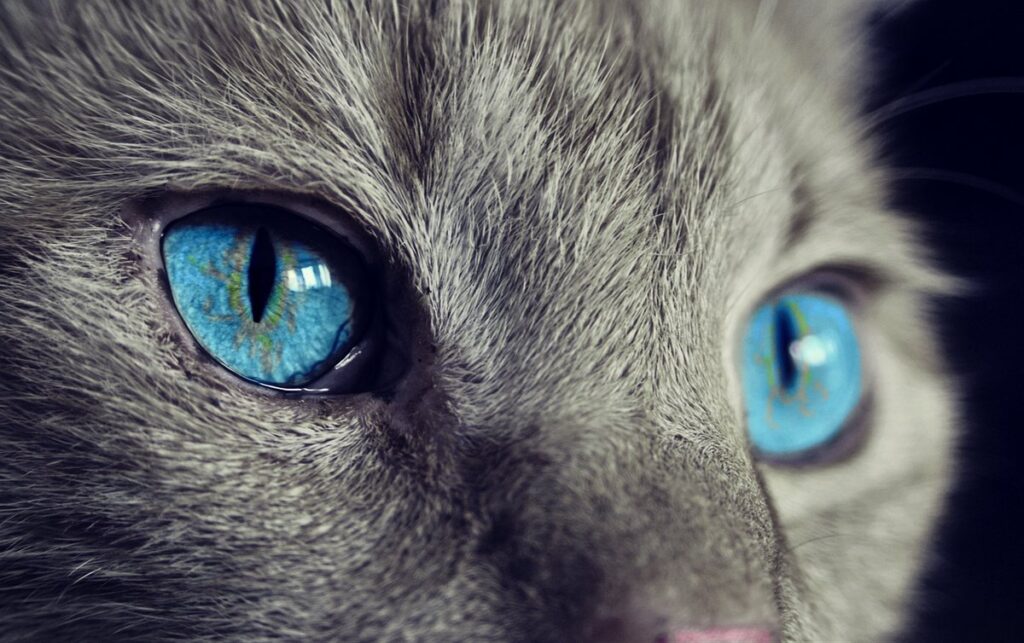
Blue Eyes in Cats: Causes and Characteristics
Blue eyes are a striking feature in cats, but have you ever wondered what causes them to appear? Let’s dive into the genetics behind these stunning peepers.
Genetics Behind Blue Eyes
When it comes to blue eyes in cats, understanding the genetics behind this unique trait is fascinating. To manifest blue eyes, a cat needs to have specific genetic conditions. The most important factor is that the cat must be homozygous recessive for the gene responsible for eye color – typically denoted as “b” or “bb”. This means they inherit two copies of the gene, one from each parent.
Another crucial condition for blue eyes in cats is the lack of pigment in the iris. Since melanin production is inhibited, the light scatters and gives the appearance of blue. It’s essential to note that true blue eyes are relatively rare in cats because they require a specific genetic makeup and environment. Factors like breed, genetics, and individual characteristics all play a role.
Some cat breeds, such as British Shorthairs or Russian Blues, are more likely to exhibit blue eyes due to their genetic predisposition. If you’re considering breeding for this trait, understanding the complex interplay between genetics and environmental factors is crucial. By recognizing these requirements, you can better appreciate the beauty of blue eyes in your feline companions.
Prevalence of Blue Eyes in Cat Breeds
Blue eyes are relatively rare in cats, but they’re not uncommon in certain breeds. One of the most well-known breeds with blue eyes is the Siamese. In fact, about 80% of Siamese kittens born have blue eyes, which gradually change to a green or yellow-green color as they mature. Abyssinians are another breed prone to having blue eyes, although the exact percentage is harder to determine.
Other breeds that may exhibit blue eyes include Bengal, American Shorthair, and some varieties of Maine Coon. However, it’s essential to note that blue eyes in cats are typically associated with a lack of pigment in the iris rather than an actual color.
When it comes to identifying blue-eyed kittens, breeders often look for specific characteristics, such as a bright blue ring around the pupil or a pale blue-gray coat. If you’re interested in getting a cat with blue eyes, be prepared for potentially higher prices due to their relatively rare occurrence and high demand from enthusiasts.
Green Eyes in Cats: A Rare Gem
Green eyes in cats are a true rarity, making them all the more special and sought after by feline enthusiasts around the world. Let’s take a closer look at these stunning eye color genetics.
The Science Behind Green Eyes
Green eyes are a rare and unique feature in cats, resulting from a specific genetic combination that’s essential to their development. To understand why green eyes occur in some felines, let’s dive into the science behind them.
In simple terms, eye color is determined by the amount and distribution of melanin in the iris, which is made up of two types: eumelanin (brown/black) and pheomelanin (red/yellow). For a cat to have green eyes, there needs to be an extremely low amount of melanin present in their irises. This lack of melanin allows light to scatter more efficiently, giving the appearance of green.
The genetics behind green eyes are complex, involving multiple genes that interact with each other to produce this specific trait. It’s estimated that only 5% of cats have a genetic makeup conducive to green eyes. For example, Siamese and Abyssinian breeds often possess the necessary combination of genes, resulting in their striking emerald-like eyes.
In many cases, green-eyed cats are born to parents with blue or odd-colored eyes, as these traits share similar underlying genetic mechanisms.
Breeds Known to Display Green Eyes
Among the numerous cat breeds that can display green eyes, some stand out for their striking appearance. If you’re fascinated by these rare and enchanting eyes, here are a few breeds worth exploring.
The Chartreux is one of the most notable breeds to feature green eyes. Originating from France, this breed boasts a sturdy build and thick coat. Their eyes are often described as ’emerald’ or ‘olive,’ adding to their allure. Another breed that frequently displays green eyes is the British Shorthair. This breed’s broad face, short legs, and affectionate nature make them a beloved companion.
The Maine Coon is also known to sport green eyes, although they can range from gold to copper in shade. Their stunning coat patterns and majestic size only add to their appeal. If you’re considering getting a cat with green eyes, keep in mind that each breed has its unique characteristics. Researching the needs and traits of these breeds will help ensure you find the perfect match.
When interacting with cats featuring green eyes, remember that every eye color is a result of genetics, not necessarily health-related. Regular veterinary check-ups can help identify any underlying issues, but for now, bask in the beauty of these rare feline friends!
Yellow or Gold Eyes in Cats: What’s Causing This Hue?
When you spot a cat with yellow or gold eyes, it’s not just their striking color that catches your attention. But have you ever wondered what causes this unique hue in felines?
The Effect of Lutein on Eye Color
When we talk about the enchanting yellow or gold eyes in cats, it’s essential to delve into the role of lutein, a carotenoid pigment that plays a significant part in producing this captivating hue. Lutein is responsible for giving the eyes their characteristic color, and its presence is often associated with certain health conditions.
Research suggests that feline diets rich in lutein can lead to an increase in the yellow or gold pigment in the eyes. This is why many cat food manufacturers include lutein as a key ingredient in their products. A study conducted by a leading animal nutrition company found that cats fed a diet supplemented with lutein had a significant increase in eye color intensity, resulting in more vibrant yellow and gold hues.
If you’re trying to encourage the development of yellow or gold eyes in your cat, consider adding foods rich in lutein to their diet. Foods like chicken liver, fish oil, and sweet potatoes are all excellent sources of this pigment. However, it’s crucial to note that excessive intake can lead to an overproduction of lutein, resulting in a potentially unhealthy condition called lutein-induced hyperpigmentation. Monitor your cat’s eye color and adjust their diet accordingly to avoid any adverse effects.
Breeds Prone to Yellow or Gold Eyes
If you’re fascinated by cats with yellow or gold eyes, you’ll be delighted to know that some breeds are more likely to display this stunning hue. The Bengal and Savannah breeds, for example, often exhibit beautiful golden eyes due to their unique genetic makeup.
The Bengal breed, in particular, is known for its striking eye color. This is because Bengals have a specific genetic trait called the “golden” gene, which causes the iris to appear yellow or gold. As a result, many Bengal cats display bright, vibrant eyes that seem almost otherworldly.
Savannahs, on the other hand, can also exhibit golden eyes, although this is less common than in Bengals. This breed’s unique genetic makeup, which includes African wildcat ancestry, contributes to its distinctive eye coloration. If you’re interested in getting a cat with yellow or gold eyes, consider adopting from one of these breeds – but be prepared for their energetic and playful personalities!
Remember that every cat is an individual, so it’s essential to work with reputable breeders who prioritize the health and well-being of their animals. With patience and research, you may just find your perfect feline match with a coat as stunning as its eyes!
Black or Marbled Cat Eyes: Understanding Their Genetics
Now that we’ve explored solid and bi-colored eyes, let’s dive into the genetics behind black or marbled cat eyes, a fascinating topic for many feline enthusiasts. This section breaks down the complexities of these striking eye colors.
The Influence of Eumelanin on Eye Color
Eumelanin is a crucial pigment responsible for producing black and dark brown colors in cat eyes. When it comes to the genetics of eye color in cats, eumelanin plays a significant role. This pigment is present in the iris, the colored part of the eye, where it contributes to the production of melanin. The more eumelanin present in the iris, the darker the eye will appear.
To understand how eumelanin affects cat eyes, let’s consider an example. A black cat has a high concentration of eumelanin in its eyes. This results in the characteristic dark coloration that we associate with black cats. On the other hand, a marbled or tortoiseshell cat may have a mix of eumelanin and pheomelanin, which produces the distinctive multi-colored effect.
It’s worth noting that while genetics play a significant role in determining eye color, other factors such as age and health can also impact how dark or light the eyes appear. In breeds like Siamese and Abyssinian, blue eyes are caused by the absence of eumelanin, not because they have more of it. This unique characteristic is due to their genetics and makes them stand out from other feline breeds.
Breeds Known for Their Dark or Marbled Eyes
When it comes to breeds known for their striking dark or marbled eye colors, some cats truly stand out from the crowd. One such breed is the Bombay, a sleek and agile feline with eyes that resemble onyx gemstones. Their dark brown or black eyes seem almost mystical, adding an air of mystery to this already exotic-looking cat.
Another breed that deserves mention is the Ocicat, a domestic breed developed to resemble wild cats from Africa and Asia. The Ocicat’s marbled eye coloration, often referred to as “marbling,” gives their eyes a stunning effect, with swirling patterns of brown, gold, or copper within a darker base coat.
Interestingly, both breeds owe their unique eye colors to the interaction between two genetic traits: one controlling the amount of pigment in the iris, and another influencing the pattern of the melanocytes (pigment cells). This intricate interplay results in those mesmerizing dark or marbled effects we see in Bombay and Ocicat eyes.
Rare Eye Colors: Red, Copper, or Oddities
Let’s dive into some of the rarest and most unusual eye colors found in cats, including vibrant reds, warm coppers, and even some truly one-of-a-kind oddities. From unique genetics to simple magic, you won’t believe these stunning shades!
The Genetics Behind Unique Eye Colors
When it comes to rare eye colors like red, copper, or other oddities, genetics plays a crucial role. You see, these unusual hues aren’t just a matter of pigmentation – they’re the result of specific genetic combinations that don’t occur often in nature.
To understand how this works, let’s break down the basics of eye color inheritance. In cats, the production of melanin (the pigment responsible for eye color) is influenced by two types of genes: the brown gene and the non-agouti gene. The interaction between these genes determines an individual cat’s eye color.
For red or copper eyes to occur, a specific mutation in the OCA2 gene must be present. This gene codes for the protein responsible for melanin production in the eyes. When this mutation occurs, it leads to a reduction in melanin production, resulting in a striking red or copper hue. Interestingly, this mutation is more common in certain breeds, such as the Siamese and Abyssinian.
If you’re hoping to breed a cat with rare eye colors, understanding these genetic combinations is essential. By selecting cats with the right genetic makeup, you can increase your chances of producing offspring with unique eye colors like red or copper. However, keep in mind that this requires careful consideration and planning – it’s not just a matter of luck!
Documenting Unusual Cat Eye Colors
Documenting Unusual Cat Eye Colors is truly a treasure hunt for feline enthusiasts. It’s not uncommon to come across cats with striking eye colors that defy the norm – think copper, red, or even oddities like green-gold eyes! When encountering these unique felines, it’s essential to take note of their characteristics and traits.
For instance, cats with copper or red eye color often possess a specific coat pattern, such as tortoiseshell or calico. Their bright, fiery gaze can be attributed to the interaction between two types of melanin: eumelanin (brown/black) and pheomelanin (red/yellow). Documenting these findings will help you better understand their genetic makeup.
To start documenting unusual cat eye colors, observe your cat’s coat pattern, color intensity, and overall demeanor. Take note of the surrounding area around their eyes – does it have a darker or lighter tone? This can provide clues about their ancestry and potential genetic influences. Consider consulting with breeders or veterinarians to gain more insights into these fascinating felines. By doing so, you’ll not only appreciate your cat’s individuality but also contribute to the broader understanding of rare eye colors in cats.
Frequently Asked Questions
Can any cat breed display multiple colors in their eyes?
Yes, some breeds are known to exhibit complex eye color patterns, such as copper or golden flecks on a blue or green background. This is due to the unique interaction of eumelanin and pheomelanin production in melanocytes.
What causes the rare occurrence of red or copper-colored cat eyes?
Red or copper eye colors are usually the result of an excess of pheomelanin, which can occur when a cat has a specific genetic makeup. These colors are often seen in breeds like the Abyssinian and the Egyptian Mau.
How common is it for cats to be born with two different eye colors?
This phenomenon, known as heterochromia iridum, occurs relatively rarely in cats. It’s more commonly associated with certain breeds, such as the Siamese or the Ragdoll, where it can appear due to a genetic variation affecting melanocyte distribution.
Can I influence my cat’s eye color through their diet?
While nutrition plays a role in maintaining overall eye health, there is no scientific evidence to suggest that dietary changes can directly affect a cat’s natural eye color. However, ensuring your cat receives a balanced diet rich in antioxidants and lutein can support their eye health.
Are cats with blue eyes more prone to certain health issues?
Research suggests that cats with blue or green eyes may be more susceptible to certain conditions, such as progressive retinal atrophy or cataracts, due to the reduced melanin in their irises. However, this is not a guarantee and regular veterinary check-ups are essential for monitoring your cat’s eye health.